Have you ever noticed those winding blood vessels behind the calves of pregnant women? Those are varicose veins that can develop during pregnancy. This happens as the body responds to changes in the circulatory system. Let's delve into the details in this easy-to-read article.
Understanding Varicose Veins During Pregnancy
Varicose veins get their name from the Latin word "varix," which means twisted. These veins appear as twisted cords under the skin. Varicose veins are relatively common during pregnancy, particularly in the third trimester. They typically show up in areas like the legs and the external genital area (vulva). In some cases, they can also appear around the anus, known as hemorrhoids.
The veins just beneath the skin's surface in the legs play a crucial role in carrying blood from the body back to the heart. They have one-way valves that ensure blood can flow upwards against gravity. During pregnancy, the walls and valves of these veins weaken. Blood vessels become dilated due to the increased blood volume, and the valves don't work as effectively.
Over time, this can lead to swelling, and the veins become visible on the skin's surface. Varicose veins are characterized by their twisted, bulging, purplish-blue appearance, usually seen on the back of the calf. In severe cases, the skin can be damaged, and painful inflammation of the blood vessels can occur.
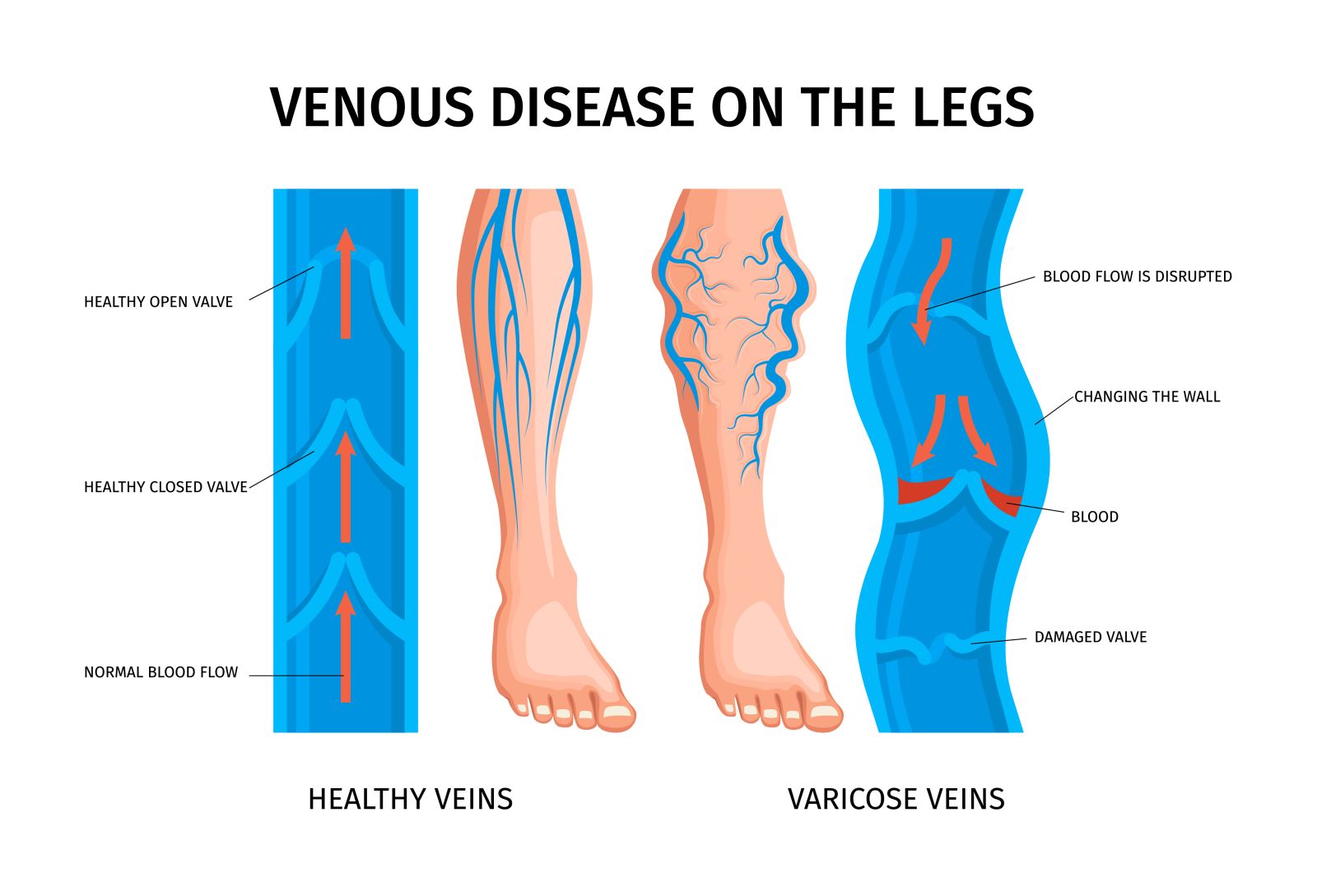
The appearance of varicose veins during pregnancy is caused by disruption of the circulatory system
Symptoms
While varicose veins during pregnancy are often harmless, they can be uncomfortable, especially when you need to sit or stand for extended periods. Common symptoms include:
- Heaviness in the legs
- Itching around the affected veins
- Leg cramps
- Pain, aches, or throbbing in the lower leg
- Swelling in the legs and ankles
- Painful bowel movements and bleeding in the case of hemorrhoids
What Causes Varicose Veins in Pregnancy?
The development of varicose veins during pregnancy is primarily related to changes in hormonal levels and the additional weight from the growing baby. These factors make it more challenging for pregnant women's blood to flow against gravity, leading to varicose veins. Here's why:
- High levels of the hormone progesterone reduce the elasticity of blood vessel walls and valves.
- Pregnancy increases blood volume, but the number of blood vessels remains the same, causing extra strain on the circulatory system.
- Pressure from the growing baby can obstruct blood flow from the legs back to the heart.
Risk Factors
Several factors increase the risk of developing varicose veins during pregnancy, including excessive sodium intake without enough fiber and water consumption, a family history of varicose veins during pregnancy, and excessive weight gain during pregnancy. Healthcare providers can diagnose varicose veins by examining the legs, genitals, and anus.
Preventing Varicose Veins
While varicose veins during pregnancy may be temporary, you can take steps to alleviate discomfort and prevent them from worsening. Try these methods to improve blood circulation:
- Avoid prolonged periods of sitting or standing.
- Don't cross your legs while sitting.
- Elevate your legs multiple times a day.
- Sleep on your left side.
- Consider using compression socks.

Avoid crossing your legs when sitting to prevent varicose veins
Rest assured, these varicose veins typically fade away within three months after giving birth. They might be a temporary inconvenience, but they're nothing to worry about. For more pregnancy-related information, explore our other articles on Fitie!