Hello, wonderful women! Ever noticed patches of skin becoming thick and scaly? It might be psoriasis, a chronic skin condition worth knowing more about. Let's delve into the details and bid farewell to any lingering curiosity with this breakdown.
Psoriasis: Where Can It Appear?
Psoriasis can manifest anywhere on the body – elbows, knees, face, scalp, nails, genitals, lower back, palms, and soles. In severe cases, it may cover a substantial portion of the skin.
Types of Psoriasis:
- Plaque Psoriasis: Most common on elbows, knees, scalp, and lower back.
- Inverse Psoriasis: Appears in skin folds and is common in overweight individuals.
- Guttate Psoriasis: Small red spots shaped like drops triggered by various factors.
- Pustular Psoriasis: Pus-filled bumps on plaques.
- Erythrodermic Psoriasis: Covers a large skin area, potentially dangerous.
- Sebopsoriasis: Oily yellow plaques on the face or scalp.
- Nail Psoriasis: Causes color changes, holes, and nail alterations.
- Arthritis Psoriasis: Causes joint inflammation and swelling.
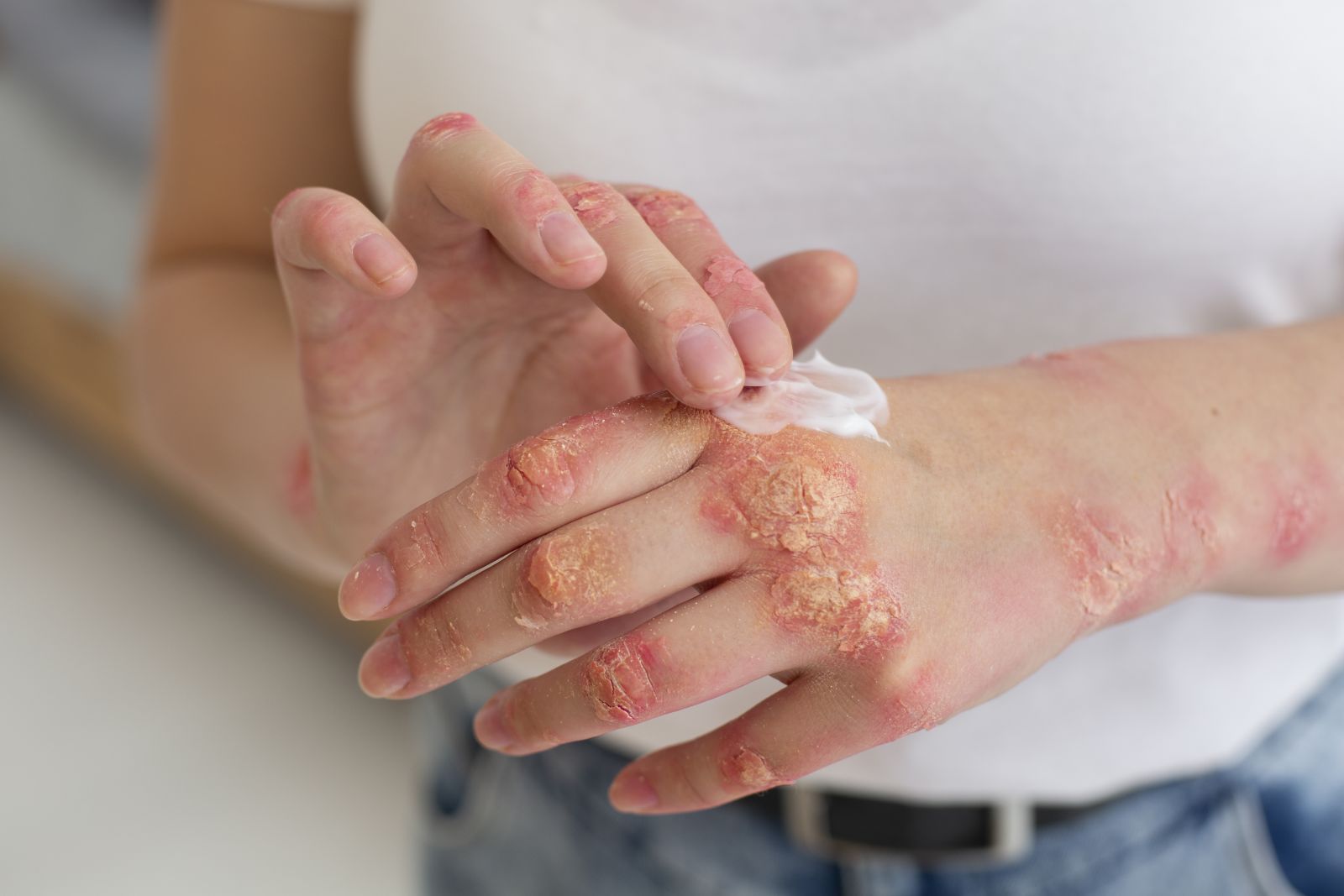
Psoriasis is a skin condition that is thick, scaly, and itchy
Symptoms of Psoriasis:
- Itching, dry, or cracked skin.
- Pain intensity varies from mild to severe.
Severity Levels:
- Light: Covers less than 3% of the body.
- Medium: Covers 3-10% of the body.
- Severe: Covers more than 10% of the body.
Psoriasis vs. Eczema:
While both cause skin discoloration, rashes, and itching, psoriasis leads to thick and scaly skin, while eczema results in dry, bumpy skin rashes with less severe itching.
Causes of Psoriasis:
An autoimmune condition triggers rapid skin cell turnover. Stress, skin injury, infection, hormonal changes, and certain medications can contribute. Psoriasis is not contagious but can be hereditary.
Diagnosis:
Doctors assess psoriasis through skin examinations, considering rash patterns, lesions, medical history, and family history. Biopsy procedures may be conducted to avoid misdiagnosis.
Treatment:
Treatment includes creams, steroids, retinoids, moisturizers, medications, and phototherapy. A healthy diet with anti-inflammatory foods is recommended. Maintain a low-fat, omega-3-rich protein intake, avoid simple carbs and saturated fats, limit alcohol, and be cautious if gluten intolerant.
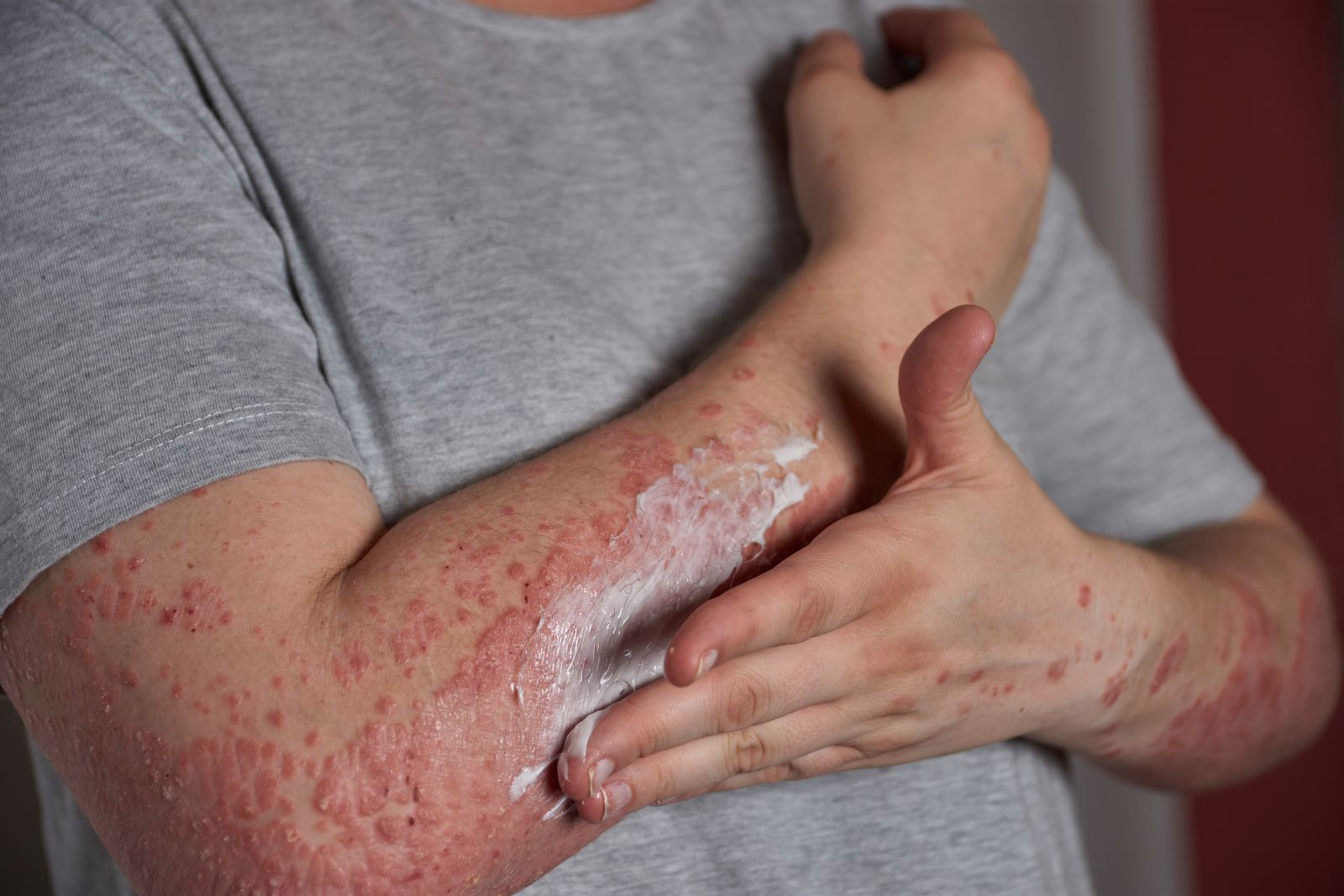
There are many treatments for psoriasis, ranging from creams, drugs, and light therapy to a healthy diet
Understanding psoriasis empowers you to manage it effectively. Remember, it's crucial to avoid triggers for flare-ups. Explore more informative articles on Fitie's website or app. Stay informed, and stay fabulous!