Hello, lovely ladies! Ever noticed areas on your skin that look like fish scales? It might be more than just dry skin; it could be ichthyosis vulgaris. In this Fitie article, let's delve into this skin condition and understand what causes it.
Ichthyosis vulgaris is a rare skin condition characterized by the accumulation of dead skin cells, creating a fish scale-like appearance. If you've experienced itchy, scaly patches on your skin, especially during colder, drier weather, it might be time to learn more about ichthyosis vulgaris.
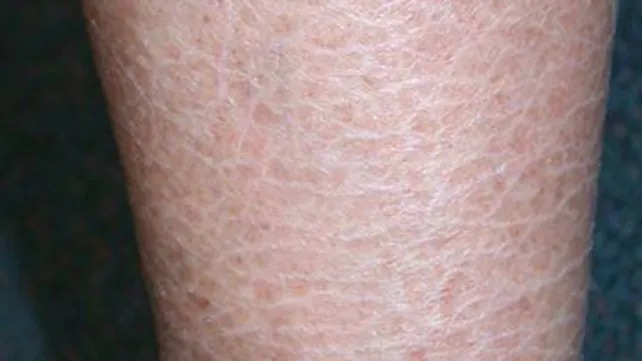
Ichthyosis vulgaris makes the skin look like fish scales | pic credit to Healthline
Symptoms
These fish scale-like symptoms are more common on certain body parts like the front of your legs, back of your arms, scalp, back, and stomach. Keep an eye out for:
- Itchy skin
- Polygon-shaped scales
- Brown, gray, or white coloration
- Excessive dryness
- Thickening, particularly on palms and soles,
- Deep cracks that may lead to infections

Symptoms tend to worsen in colder, drier conditions.
Causes
Ichthyosis vulgaris often appears at birth or in early childhood, disappearing later but possibly resurfacing in adulthood. It's linked to genetic factors following an autosomal dominant pattern. If a parent carries a mutated gene, it can be passed on to the child.
In rare cases, adults with unmutated genes can develop this condition, sometimes alongside other health issues such as cancer, kidney failure, or thyroid disease. It may also coexist with other skin conditions like atopic dermatitis or keratosis pilaris.
Diagnosis
Diagnosing ichthyosis involves a visual examination by a doctor, considering your personal and family skin history. Additional tests, like blood tests or a biopsy, may be recommended to rule out similar skin conditions such as psoriasis. A biopsy involves taking a small piece of scaly skin for microscopic examination.
Treatment
While there's no cure, treatment focuses on symptom management. Doctors may prescribe creams or ointments containing lactic acid, alpha hydroxy acids, or retinoids. Home treatments include regular use of moisturizers with urea or propylene glycol. Other practices involve showering more frequently, applying petroleum jelly to deep cracks, or using an abrasive sponge on softened skin.
So, if you're dealing with fish scale-like skin, fear not! Keep your skin moisturized with lotions, petroleum jelly, or gentle exfoliation. For more intriguing reads, head over to Fitie. Happy reading, ladies!