Ever wondered about birthmarks? They're those skin companions that show up right from the start. But here's the scoop: birthmarks come in various types, not just red spots. Are they a cause for concern, especially if they look a bit off? Let's dive into this Fitie article to get all the deets.
Understanding Birthmarks
Birthmarks are skin growths that make an entrance either at birth or shortly afterwards. They can pop up anywhere – on the face, hands, arms, you name it. The size, shape, color, and whether they stick around or fade can vary from person to person. Some are permanent, some vanish completely, and others decide to grow along with time.
Types of Birthmarks
Birthmarks don't show up for a specific reason; the underlying cause remains a mystery. Rest assured, they're not linked to anything a woman did or didn't do during pregnancy. Here are the two main types of birthmarks:
.jpg)
There are 2 types of birthmarks, namely pigmented and vascular
1. Pigmented Birthmarks
This type occurs when there's an abundance of pigment cells (melanocytes) in a specific area. These cells give your skin its natural color. The types include:
a. Moles:
These can be pink, light brown, or black, either flat or raised. They can pop up anywhere and may fade or stick around for life.
b. Café au lait spots:
These are irregularly shaped, pale brown spots that can appear from birth to childhood. Some may grow, but they usually fade slowly. Note: They can be linked to a rare condition called neurofibromatosis.
c. Mongolian spots:
Looking like flat bluish-gray spots, these are more common in people with naturally dark skin. Typically found on the lower back and buttocks, they resemble bruises but fade within a few years.
2. Vascular Birthmarks
Formed when blood vessels in certain areas of the skin don't form as they should. Here are the types:
a. Salmon patches:
Pink or red, often found on the forehead, between the eyebrows, eyelids, or the back of the neck. Caused by a group of blood vessels under the skin.
b. Hemangiomas:
Pink, bright red, or blue, often on extremities, head, or neck. They might grow but usually stop and fade by adolescence, also known as strawberry hemangiomas.
c. Port-wine stains:
Pink, red, dark red or purple typically appears on the eyelids. These don't fade and might darken over time if untreated.
Can You Remove Them?
While birthmarks are generally harmless and don't need removal, some opt for it due to cosmetic concerns. However, certain birthmarks like hemangiomas or moles could pose a higher risk of skin cancer. If you're concerned, it's best to consult a doctor. Removal options include laser therapy, surgery, cryotherapy, or specific medications.
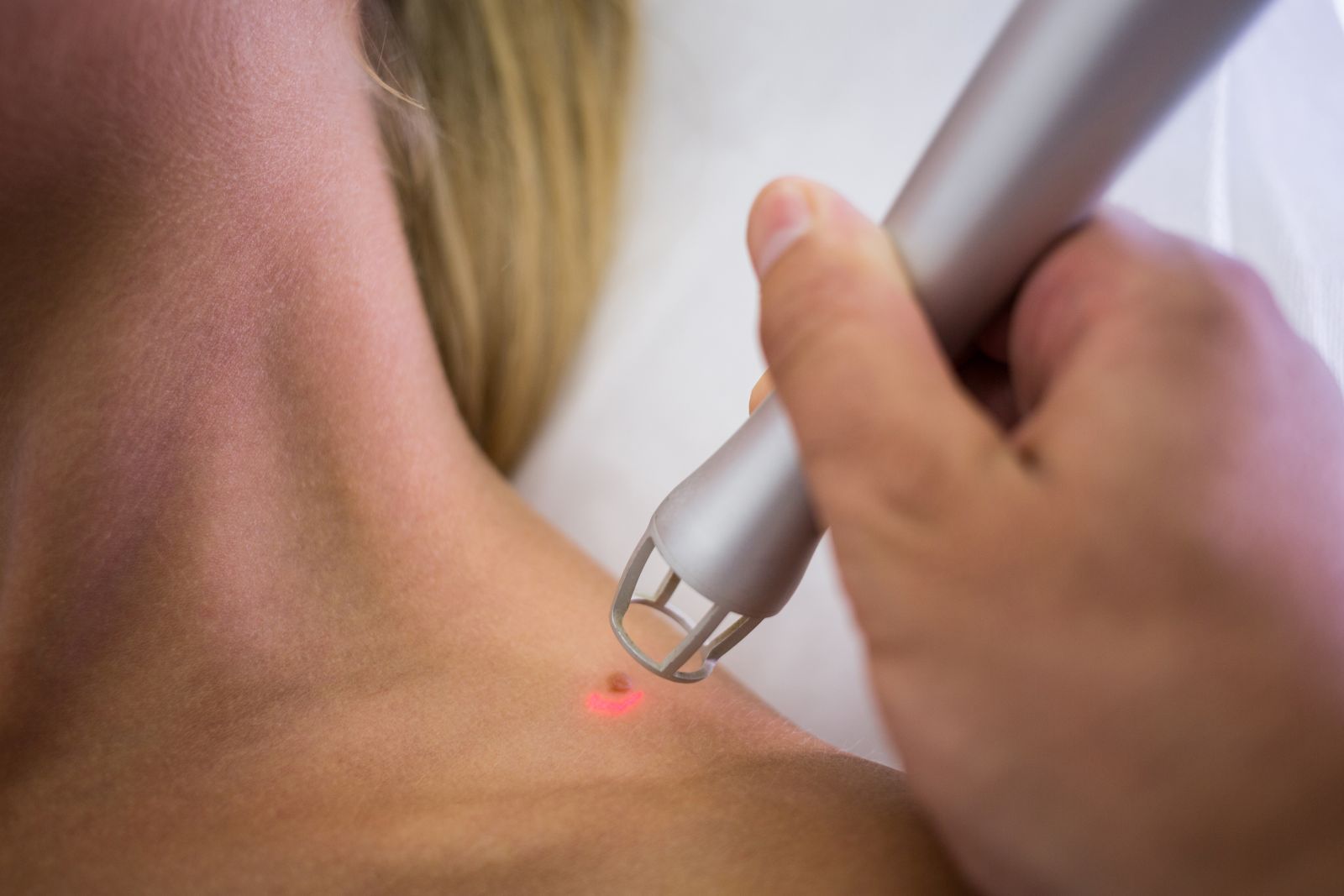
Birthmarks can be removed by laser therapy, surgery, cryotherapy, or taking medication
So, whether pigmented (moles, café au lait spots, Mongolian spots) or vascular (salmon patches, hemangiomas, port-wine stains), birthmarks come in different forms. If you're not a fan of their appearance, removal options like laser therapy, surgery, or medication are available. For safety concerns, don't hesitate to consult with a doctor at Fitie!