Monkeypox or monkeypox (Mpox) is a contagious disease caused by the monkeypox virus. This virus is part of the Orthopoxvirus genus, which is the virus that causes chickenpox. Mpox is also a zoonotic disease, meaning it can spread from animals to humans and vice versa, and from humans to other humans. Cases were first discovered in humans in 1970 in the Democratic Republic of the Congo.
Transmission of Monkeypox
Anyone can be infected with monkeypox. Transmission to humans can occur through direct contact with contagious skin or lesions (fluid-filled bumps) in the mouth and genitals. Forms of contact that can cause transmission include:
-
Face-to-face (talking or breathing)
-
Skin-to-skin (touch, hug, massage, or vaginal/anal sex)
-
Mouth-to-mouth (kissing)
-
Mouth-to-skin (kissing the skin or oral sex)
-
Short-range respiratory droplets (aerosol) from prolonged close contact
-
The virus enters the body through damaged skin, mucous surfaces (mouth, pharynx, eyes, genitals, anus, and rectum), or the respiratory tract.
-
Touching objects, clothing, or surfaces previously used or touched by an infected person and not disinfected can also lead to transmission.
In humans, Mpox can spread to other family members, sexual partners, and even from a fetus during pregnancy or a newborn through close contact with the mother. Furthermore, transmission from animals to humans occurs when infected animals bite or scratch, usually during hunting, skinning, cooking, touching carcasses, or even consuming them.
Symptoms
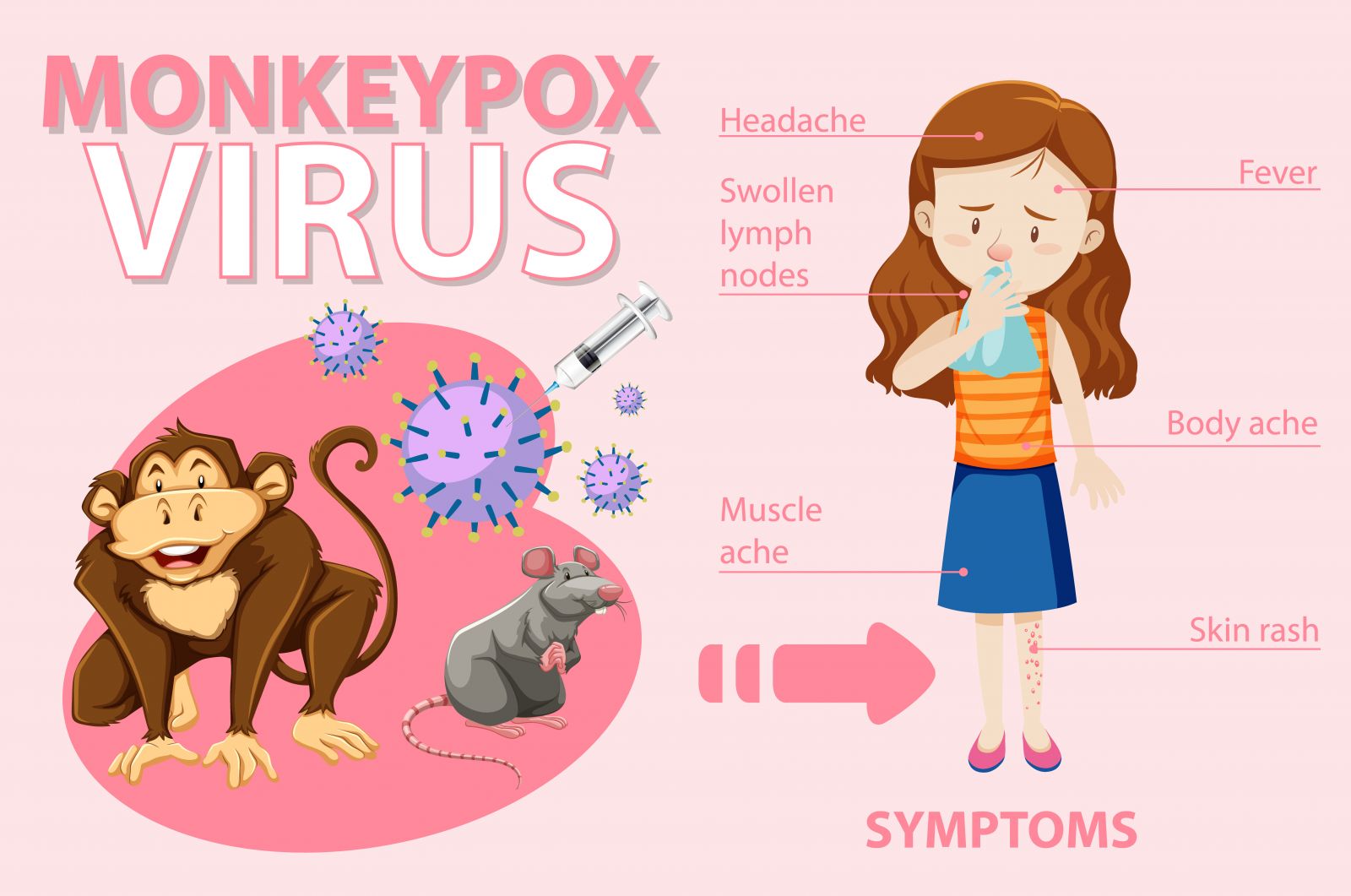
Transmission can occur as long as symptoms and lesions are not completely healed, and a new skin layer has not formed. It can even spread when someone shows no symptoms. Common symptoms of monkeypox usually appear within three weeks and last for 2-4 weeks or longer in individuals with weakened immune systems. Common Mpox symptoms include:
-
Rash
-
Fever
-
Sore throat
-
Headache
-
Backache
-
Respiratory pain
-
Muscle pain
-
Fatigue
-
Swollen lymph nodes (a classic monkeypox feature)
Fever, muscle pain, and sore throat typically precede the appearance of rashes. Rashes develop from flat lesions, progress to fluid-filled blisters, and scab when healed. They can appear on the palms, hands, feet, chest, face, mouth, throat, or near the genitals. Some individuals may have only one lesion, while others may have hundreds or more.
Risk of Complications
Infected individuals can become severely ill, especially when their immune system is weakened. In such cases, complications such as skin abscesses, pneumonia, corneal infections, difficulty swallowing, severe dehydration due to vomiting, malnutrition, sepsis, inflammation in the brain, heart, rectum, genitals, and urinary tract, and even death can occur.
Diagnosis
Diagnosing monkeypox can be challenging due to symptoms resembling other infections or conditions such as chickenpox, measles, bacterial skin infections, scabies, sexually transmitted infections (herpes, syphilis), or drug allergies. Virus detection is carried out through PCR laboratory tests, taking samples from rashes, lesions, or swabs from the anus, rectum, and oral respiratory tract.
Treatment
There is no specific FDA-approved medication for monkeypox, but certain antivirals effective against similar poxviruses can be used. Alternatively, individuals need to receive the Mpox vaccine Tecovirimat to prevent infection.
Tecovirimat can reduce the virus's quantity in the body and is often prescribed for those with severe Mpox symptoms (rash infection, bleeding, conjoined and enlarging lesions) or with severe illness. However, the vaccine is still under investigation, and its administration must have FDA approval.

Care and Prevention
Individuals with Mpox should regularly wash their hands before and after touching lesions, disinfect surrounding items or objects to be touched or used by others, keep the skin dry and exposed, but cover it when around others, use mouthwash if there are lesions in the mouth, bathe in warm water, and take pain relievers.
Mpox-affected individuals should self-isolate at home or in the hospital if necessary. They should refrain from scratching the lesions and shaving the affected area until the lesions are completely healed, with a new skin layer emerging. Medical masks should be used when in crowded environments.
Download the Fitie app now to get more interesting tips and information!