A Pap smear is a procedure to detect the growth of abnormal cells (precancerous cells) or cervical cancer in women.
During the procedure, a sample of cells from the cervix will be taken slowly to observe for examination if there is an abnormal growth or not. Usually during the procedure you will feel a little discomfort, but certainly doesn’t cause prolonged pain.
Every woman is recommended to do a pap smear test once every 3 years for women aged 21 years and over, especially for those who are at high risk, such as having sex with more than one partner or having sex with a partner who has more than one sexual partner.
Cervical cancer become the second leading cause of death after breast cancer. So it is important to have a regular screening test because cervical cancer can be cured if detected as early as possible.
Who needs to do a pap smear test?
Experts recommend every woman aged 21 years and over to have a Pap smear test every 3 years and every 5 years for women aged 30 to 65 years. A Pap smear test needs to be combined with an HPV test.
Pap smears tests are also recommended for women who are at high risk of cervical cancer, regardless of age. Women can be at high risk and need regular Pap smears if they have the following factors:
- HIV patient
- Have a weak immune system, for example, due to organ transplantation, chemotherapy, or long-term use of corticosteroids
- Get an abnormal result (precancerous lesion) on a previous Pap smear test
- Exposure to or using drugs for cancer such as diethylstilbestrol (DES)
- Have a smoking habit
- Regular Pap smear test may be discontinued in women who have undergone surgical removal of the entire uterus and cervix (total hysterectomy). Noted that total hysterectomy procedure is not perform under indications of cancer or precancerous lesions. If a total hysterectomy is conducted because of cancer or precancerous, Pap smears should still be done regularly.
Pap smears should not be done at the age of 25 weeks of pregnancy and above because it can cause severe pain during the examination. If you want to do a pap smear test, you should wait until 12 weeks after giving birth.
Pap smears test can’t be done during menstruation because it can make the results less accurate. If you want to do a pap smear, you are advised to wait at least 5 days after your period is over.
How Is the Pap smear Procedure?
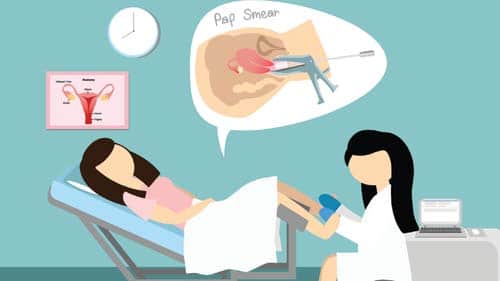
Before doing a pap smear test, the doctor will ask you not to have sex, clean the inside of the vagina, and don’t insert anything into the vagina 2 days before starting the procedure.
The Pap smear procedure is performed by an obstetrician and gynecologist. The process only takes about 10–20 minutes. Some women feel afraid when they hear the word “pap smear”.
Although it causes discomfort, this procedure is certainly safe if performed by a certified doctor. It should also be underlined that this procedure does not leave prolonged pain. If you are worried, you can take a peek at the following steps that will be done during the pap smear procedure:
- The doctor will ask the patient to remove the lower clothing, then lie on the table with the knees bent and the thighs exposed.
- The doctor will insert a speculum, which is a device that has duck-bill-shape into the vagina. The speculum is used to open the walls of the vagina so that the cervix can be seen. During this process, there may be discomfort in the pelvic area.
- The doctor will take a sample of tissue in the cervix using a spatula, brush, or both. When finished, the doctor will store the sample in a special container and examine it in the laboratory.
After the pap smear procedure is complete, the patient will discuss the results with the doctor. If the results are negative, then the patient is said to not have cervical cancer and doesn’t need to do further examination. If the result is positive, then the patient is said to have abnormal cells both cancerous and precancerous.
The chances of recovery for cervical cancer patients are even bigger if the detection is carried out earlier. There is no point in delaying the initial screening if you realize you may be at high risk. If you want to inquire further about pap smears, you can chat with doctors at Fitie. Your privacy will be protected, don't be afraid to say anything on Fitie.