Health Benefits
When you're in the viparita karani pose, you're in an active inversion position. With your legs above your entire body, gravity works on the legs in a way it doesn't throughout the day. This movement won't make your neck and head tense. Some health benefits of this pose are:
1. Improves Circulation
When the veins don't efficiently carry blood from the legs back to the heart (venous insufficiency), the body's circulation becomes weak. When this condition occurs, the risk of swelling is higher. Not only that, it can also lead to blood clotting.
Apart from venous insufficiency, inhibited blood circulation from the whole body to the heart can occur due to standing or sitting activities all day long. The benefit of lifting the legs up in situations like this is to restore the blood flow from the legs to the heart, reducing leg swelling.
2. Reduces Stress
It's well known that yoga, in general, can have a positive impact on the body's stress response system. One of these benefits is obtained from the legs-up-the-wall pose. This movement is intended to guide the body towards relaxation, especially because it doesn't put much pressure on the neck and head.
 The viparita karani movement helps reduce stress
3. Additional Benefits
Apart from helping the body relax and improving circulation, this movement is often said to alleviate headaches and high blood pressure. However, there isn't much evidence to support these claims. Nevertheless, it's worth a try. Can everyone do it? Read on!
Proper Way to Perform the Pose
Quoting Dr. Saper, a researcher and yoga instructor, to Cleveland Clinic, recommends that this pose be done every time you do yoga towards the end of the practice. This pose can be safely done once or twice a day, either as part of a yoga routine or as a standalone pose.
To get the maximum benefit, this legs-up movement should be done correctly to ensure safety and avoid pressure on the neck or spine. Here are the steps to properly do the viparita karani pose:
-
Prepare a cushion, such as a blanket or yoga mat on the floor and next to the wall, and use a thin pillow for your head (optional).
-
Lie on the cushion or mat with your buttocks lifted towards the wall. The tailbone should remain flat on the floor a few cm away from the wall. The back and head should be parallel to the floor perpendicular to the wall. Make sure you're in a relaxed state.
-
Feel the stretch (it shouldn't hurt) as the back of your legs touch the wall and your feet are parallel to the floor below.
-
Make sure your body is calm, relaxed, and breathe deeply while holding the pose. The recommendation is 2 to 3 minutes.
-
Finish the pose slowly, moving carefully into a sitting position, then sit quietly for at least 30 seconds.
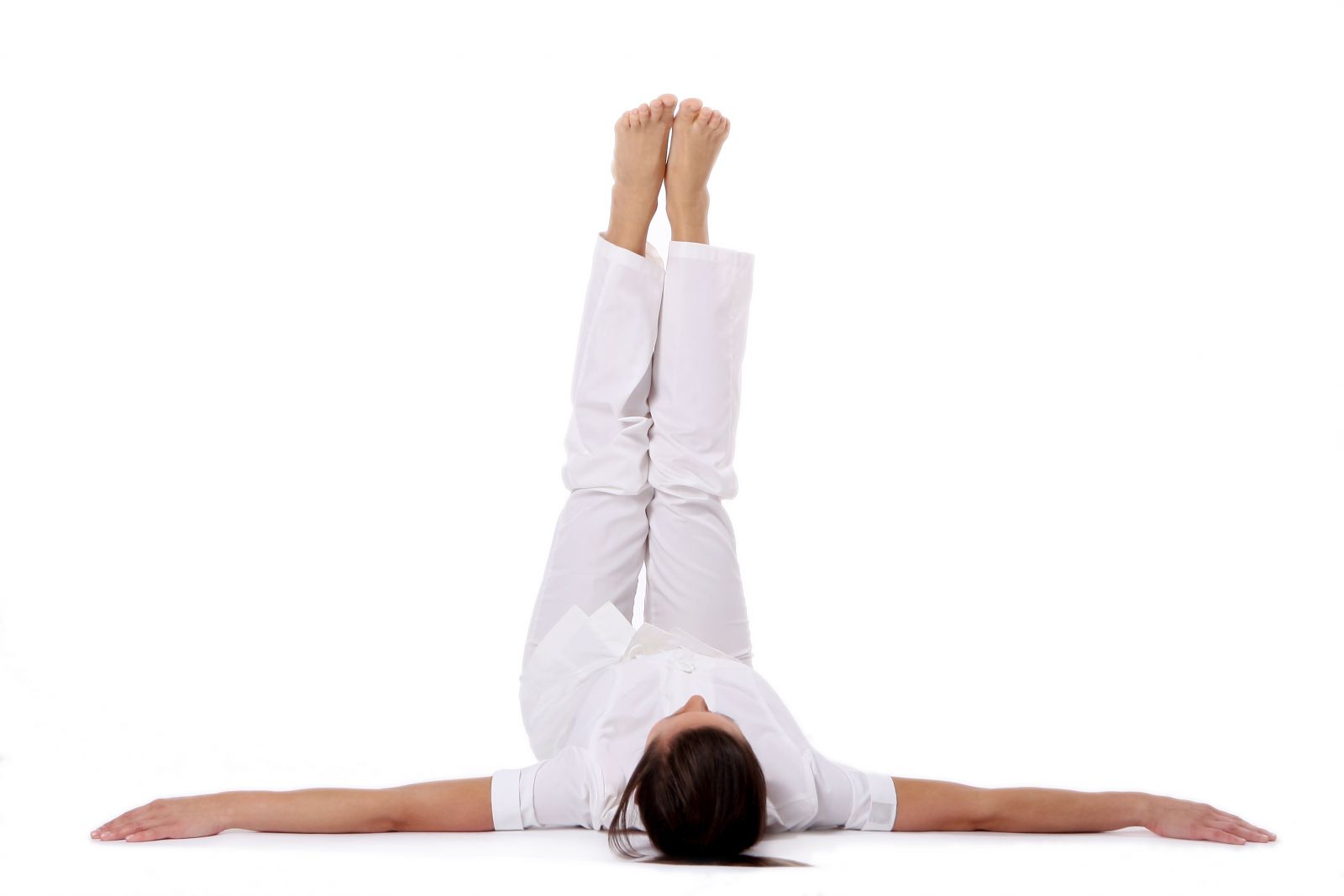 Get the pose right for the best benefits
Recommendations
It looks promising in terms of its benefits, but this pose still carries some risks associated with the legs-up movement. Some conditions that are not recommended for doing the viparita karani pose are as follows:
-
Glaucoma: as it increases the pressure of fluid in the eyes
-
Excessive fluid retention: because the heart will be burdened if the fluid returns excessively. For example, in congestive heart failure, kidney failure, and liver failure or cirrhosis
-
Uncontrolled high blood pressure: as it will further increase blood pressure
So, it's true that lifting the legs up while leaning against the wall has its benefits. Two scientifically proven advantages are improving circulation and reducing stress. This pose can be done by anyone, but it's not recommended for people with glaucoma, experiencing conditions related to fluid retention, as well as high blood pressure. Have you tried it, Ladies?
Hey, grab the Fitie app now for cool tips and other fun stuff!