In the robotics contest organized by DARPA (The Defense Advanced Research Projects Agency) in 2013, the robot made by Boston Dynamics, Atlas, attracted visitors' attention.
Not only capable of mimicking basic human movements, this humanoid robot, standing 1.8 meters tall and weighing 150 kilograms, is equipped with calisthenic abilities to assist humans in dangerous situations, such as fires, nuclear reactor leaks, and others.
What Is a Humanoid Robot?
Throughout history, the body and mind of humans have inspired artists, engineers, and scientists to embody them in various forms, such as cave paintings, sculptures, photos, and computer animations.
Humanoid robots are a continuation of this human curiosity in a more complex form. Humanoid robots are also called anthropomorphic robots because they are designed to mimic human movements and perform human activities.
The complexity of humanoid robot capabilities requires interdisciplinary in their development process, such as AI, machine learning, biomechanics, electrical, and sensors.
Although the ultimate goal of creating humanoid robots is to make it easier for humans to perform everyday tasks, humanoid robots also serve as 'guinea pigs' to prove evolutionary psychology and neuroscience theories.
The first programmable and mass-produced humanoid robot was Unimate, created in 1961. Unimate was designed to assist production in assembly lines, moving products from one place to another, and even welding.
Honda also released a humanoid robot named ASIMO in 2000. In terms of capabilities, ASIMO can be said to be the most advanced robot of its time, with movements that were not as stiff as its predecessors.
With the development of computer science and its derivatives, humanoid robots have reached a much more advanced level, one of which is marked by the emergence of Atlas.
What Are Atlas's Abilities?
In terms of components, Atlas is equipped with two vision systems, namely a laser rangefinder and stereo cameras controlled remotely. Atlas also has hands with motor sensors that can detect objects around it.
As mentioned earlier, these components are designed according to their purpose of assisting humans in performing dangerous tasks, such as conducting rescues in difficult-to-reach areas.
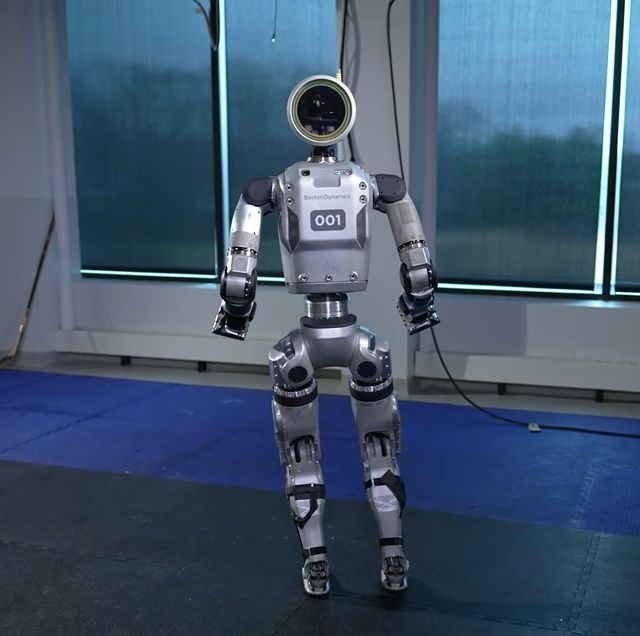
The latest version of Atlas released this year is equipped with better capabilities than the initial version. If the initial version of Atlas used hydraulic power, the latest version of Atlas now uses fully electric power.
"We designed the electric version of Atlas to be stronger, more agile, and more flexible," Boston Dynamics said in its press release, as reported by The Verge.
"This latest version of Atlas," continued Boston Dynamics, "still mimics human movements, but has surpassed the physical limitations of humans."
In a teaser video released by Boston Dynamics, Atlas demonstrates its ability to fold both legs up to 180 degrees over its head, then stand up and twist its body like a ghost in horror movies.
With such flexibility, humanoid robots have already reached a point far beyond the physical limitations of humans, as stated by Boston Dynamics.
Of course, Artificial Intelligence (AI) plays a significant role in the development of Atlas. Machine Learning, a branch of AI, allows Atlas to train, improve, and develop its own capabilities.
It's not impossible that after this, humanoid robots will surpass Atlas with capabilities we've never imagined before. Hopefully, future humanoid robots will increasingly make human work easier, Ladies.
Want to know more about the latest technology information? Find everything on Fitie!